18
How to Validate an Email Address Online (Step-by-Step Guide)
Invalid emails waste time, money, and hurt deliverability. In this guide, you’ll learn why email validation matters, how it works, and simple steps to check if an email is valid. We’ll also show you how to instantly verify any email address with the Reciphub E-mail Validator.
Introduction: Why Email Validation Matters
Every business relies on email. Whether it’s for marketing campaigns, account sign-ups, or customer support, the reliability of your email list directly impacts performance. Sending to invalid addresses leads to:
- High bounce rates
- Damaged sender reputation
- Lower deliverability
- Wasted marketing spend
That’s why email validation is a crucial step. Let’s explore how it works and how you can validate emails instantly.
What Is Email Validation?
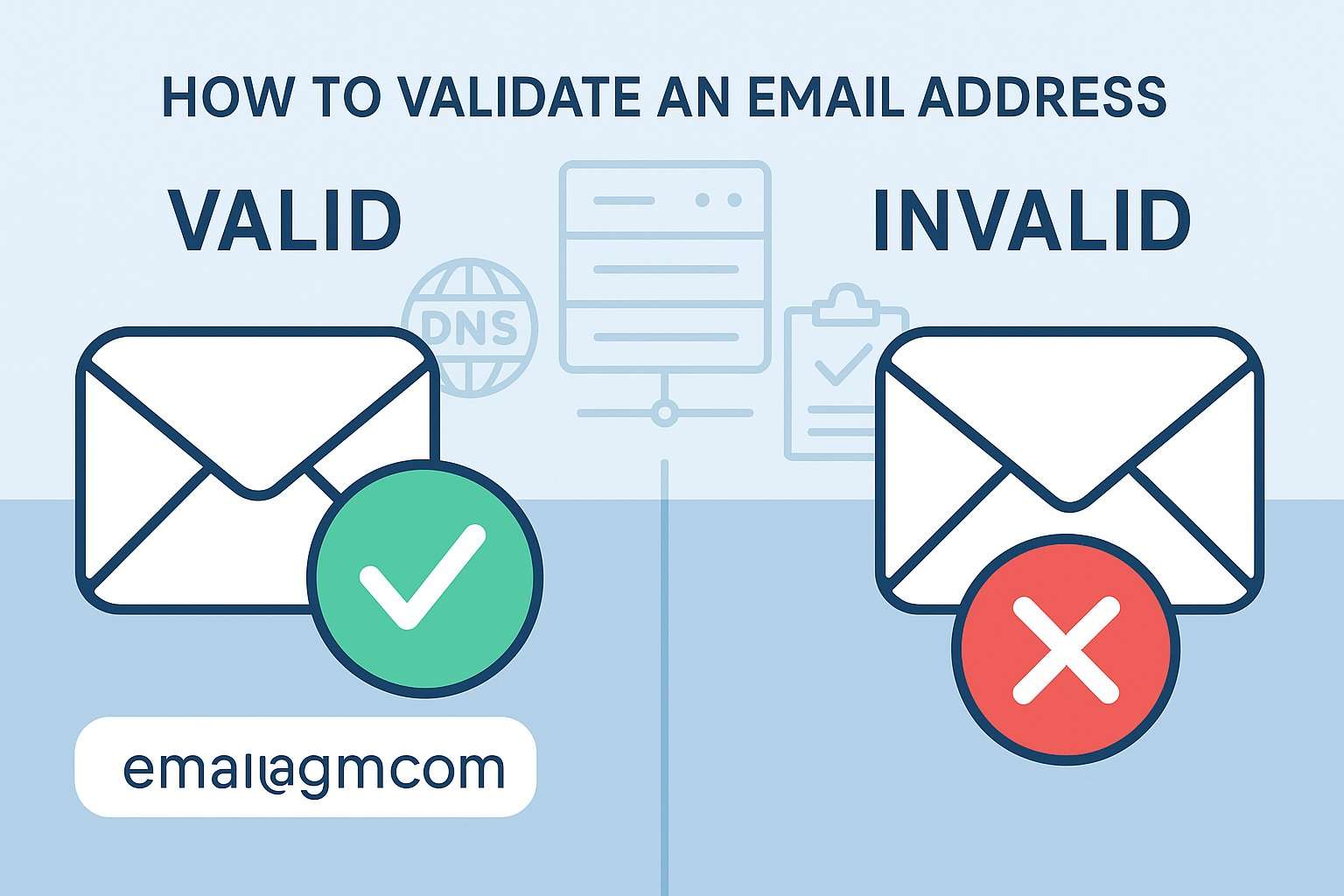
Email validation is the process of checking if an email address is correct, active, and deliverable. It typically includes:
- Syntax check → Verifies if the format matches user@example.com.
- Domain check → Confirms the email’s domain has valid DNS and MX records.
- Mailbox check → Determines if the mailbox actually exists and can receive mail.
Why Validate Emails?
1. Reduce Bounce Rates
Fewer invalid addresses = fewer failed sends.
2. Protect Sender Reputation
Email providers (like Gmail, Outlook) monitor your bounce rate. High bounces = more spam filtering.
3. Save Money
Most ESPs (Mailchimp, Sendgrid, etc.) charge per send. Why pay for emails that don’t exist?
4. Improve Deliverability
Validated lists = better inbox placement and engagement.
5. Prevent Fraud
Fake emails are often used for spam or malicious sign-ups. Validation helps filter them.
How Email Validation Works
- Step 1: Syntax Check
Example: john@@gmail.com → invalid. - Step 2: Domain/MX Check
user@domain.com → check if domain.com has mail servers. - Step 3: Mailbox Ping (non-intrusive)
Tests if the mailbox exists without sending an email.
Ways to Validate Emails
Method 1: Use an Online Email Validator (Recommended )
The easiest way is with Reciphub’s E-mail Validator:
- Go to Reciphub.site
. - Open E-mail Validator.
- Enter the address.
- Click Validate → instant result.
Method 2: Manually Check
- Send a test email (risky, not scalable).
- Use DNS lookup tools for MX records.
- Check formatting with regex.
Method 3: Bulk Validation
- Useful for email lists.
- Services exist, but online tools like Reciphub are perfect for single checks.
Real-World Use Cases
- Marketers validating email lists before campaigns.
- Web developers validating sign-up forms.
- Business owners reducing fake leads.
- Support teams ensuring correct customer contact.
Common Mistakes to Avoid
- Only relying on syntax checks (doesn’t catch inactive domains).
- Not validating new sign-ups in real-time.
- Ignoring spam traps and disposable emails.
Best Practices for Email Validation
- Validate emails before campaigns.
- Use real-time validation on sign-up forms.
- Clean your lists every 3–6 months.
- Remove bounces and inactive users.
FAQs
Q: Is email validation the same as verification?
A: Validation = checks syntax + domain. Verification = goes deeper, checking mailbox existence.
Q: Can I validate emails in bulk?
A: Yes, though Reciphub’s tool is best for single entries.
Q: Does email validation guarantee deliverability?
A: It reduces risks, but content and sender reputation also matter.
Conclusion
Email validation isn’t optional—it’s essential for protecting your sender reputation, lowering bounce rates, and saving costs.
The fastest way to check emails? Use the Reciphub E-mail Validator. It’s free, instant, and accurate.
Try it now: Reciphub E-mail Validator
Contact
Missing something?
Feel free to request missing tools or give some feedback using our contact form.
Contact Us