23
The Benefits of Using UUIDs and How to Generate Them
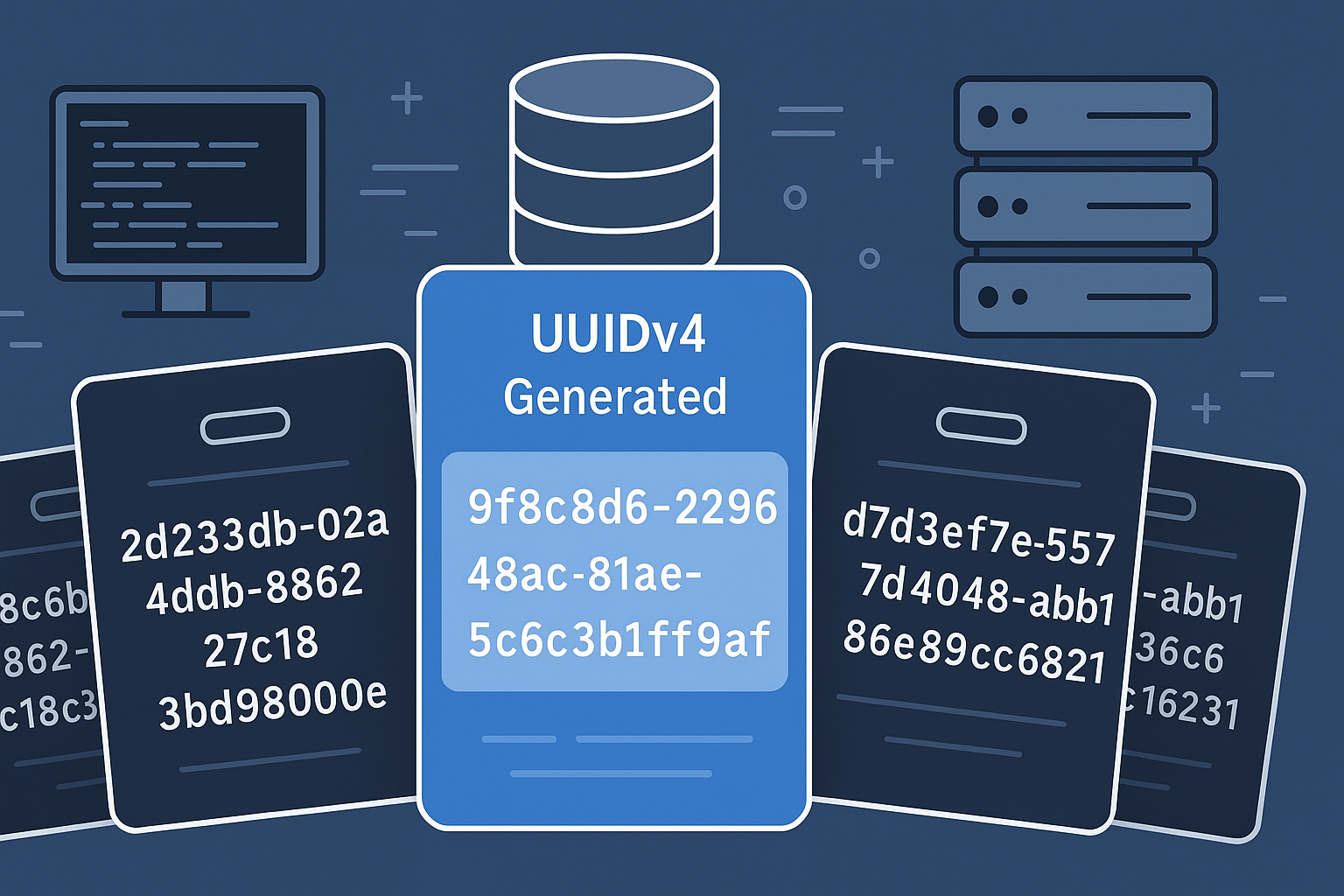
UUIDs (Universally Unique Identifiers) are essential for creating unique, collision-free IDs in databases, APIs, and modern applications. In this guide, we’ll explore what UUIDs are, why they’re beneficial, and how you can generate them easily online with the Reciphub UUIDv4 Generator.
Introduction: Why UUIDs Matter
In a digital world where billions of records, users, and devices interact every second, ensuring uniqueness is critical. Traditional numeric IDs can lead to collisions, scalability issues, and even security risks. That’s where UUIDs (Universally Unique Identifiers) come in.
A UUID is a 128-bit value that is statistically guaranteed to be unique. It’s widely used in databases, APIs, cloud applications, and distributed systems.
What Is a UUID?
A UUID (or GUID in Microsoft systems) is a unique identifier in the format:
550e8400-e29b-41d4-a716-446655440000
- Length: 36 characters (128 bits).
- Format: Hexadecimal + hyphens.
- Version: The most common is UUIDv4, which uses random or pseudo-random numbers.
Benefits of Using UUIDs
1. Global Uniqueness
Unlike auto-increment IDs, UUIDs ensure uniqueness across servers, systems, and time zones.
2. Scalability
Perfect for distributed databases — no central authority needed to generate IDs.
3. Security
Harder to guess than sequential IDs, reducing risk of ID enumeration attacks.
4. Flexibility
UUIDs can be used in:
- Database primary keys
- Session identifiers
- File names and storage paths
- API keys and authentication tokens
5. Independence
UUIDs don’t rely on a central counter, which makes them resilient in offline systems.
UUID vs GUID: What’s the Difference?
- UUID: General standard (RFC 4122).
- GUID: Microsoft’s implementation of UUID.
In practice, they’re nearly the same.
Types of UUIDs
- UUIDv1 → Time-based, includes timestamp & MAC address.
- UUIDv3 → Name-based, uses MD5 hashing.
- UUIDv4 → Randomly generated (most popular).
- UUIDv5 → Name-based, uses SHA-1 hashing.
How to Generate UUIDs
Method 1: Online Tool (Beginner-Friendly )
Use the Reciphub UUIDv4 Generator:
- Visit Reciphub.site
. - Open UUIDv4 Generator.
- Click Generate → Get a unique UUID instantly.
Method 2: Programming Languages
Python
import uuid
print(uuid.uuid4())
JavaScript
import { v4 as uuidv4 } from 'uuid';
console.log(uuidv4());
Java
import java.util.UUID;
class Main {
  public static void main(String[] args) {
    System.out.println(UUID.randomUUID());
  }
}
Where UUIDs Are Commonly Used
- Databases → As primary keys in PostgreSQL, MySQL, MongoDB.
- Web APIs → To uniquely identify resources.
- Cloud Services → AWS, GCP, Azure use UUIDs for resource IDs.
- IoT Devices → Ensure uniqueness across billions of devices.
Limitations of UUIDs
- Storage Size → UUIDs are larger than integers (16 bytes vs 4 bytes).
- Sorting → Random UUIDs don’t preserve order.
- Indexing Performance → May slow down certain databases.
Solution: Use UUIDv1 or ULIDs if you need order-preserving IDs.
Best Practices for Using UUIDs
- Use UUIDv4 for most applications (best balance of uniqueness and randomness).
- Avoid exposing UUIDs directly in URLs if they’re sensitive.
- Store UUIDs in binary format (BINARY(16)) for efficient databases.
- Validate UUID format before accepting input in APIs.
FAQs
Q: Can two UUIDs ever collide?
A: The probability is astronomically low (1 in 2¹²² for v4).
Q: Should I use UUIDs instead of integers in databases?
A: Depends on scale. For small apps, integers are fine. For distributed apps, UUIDs are safer.
Q: Are UUIDs secure?
A: UUIDs are unique, not encrypted. They should not replace passwords or tokens.
Conclusion
UUIDs are the backbone of modern applications, ensuring global uniqueness without central coordination. Whether you’re building a website, an API, or a distributed system, UUIDs provide scalability, flexibility, and reliability.
The easiest way to generate them? Use the free Reciphub UUIDv4 Generator
.
Contact
Missing something?
Feel free to request missing tools or give some feedback using our contact form.
Contact Us