26
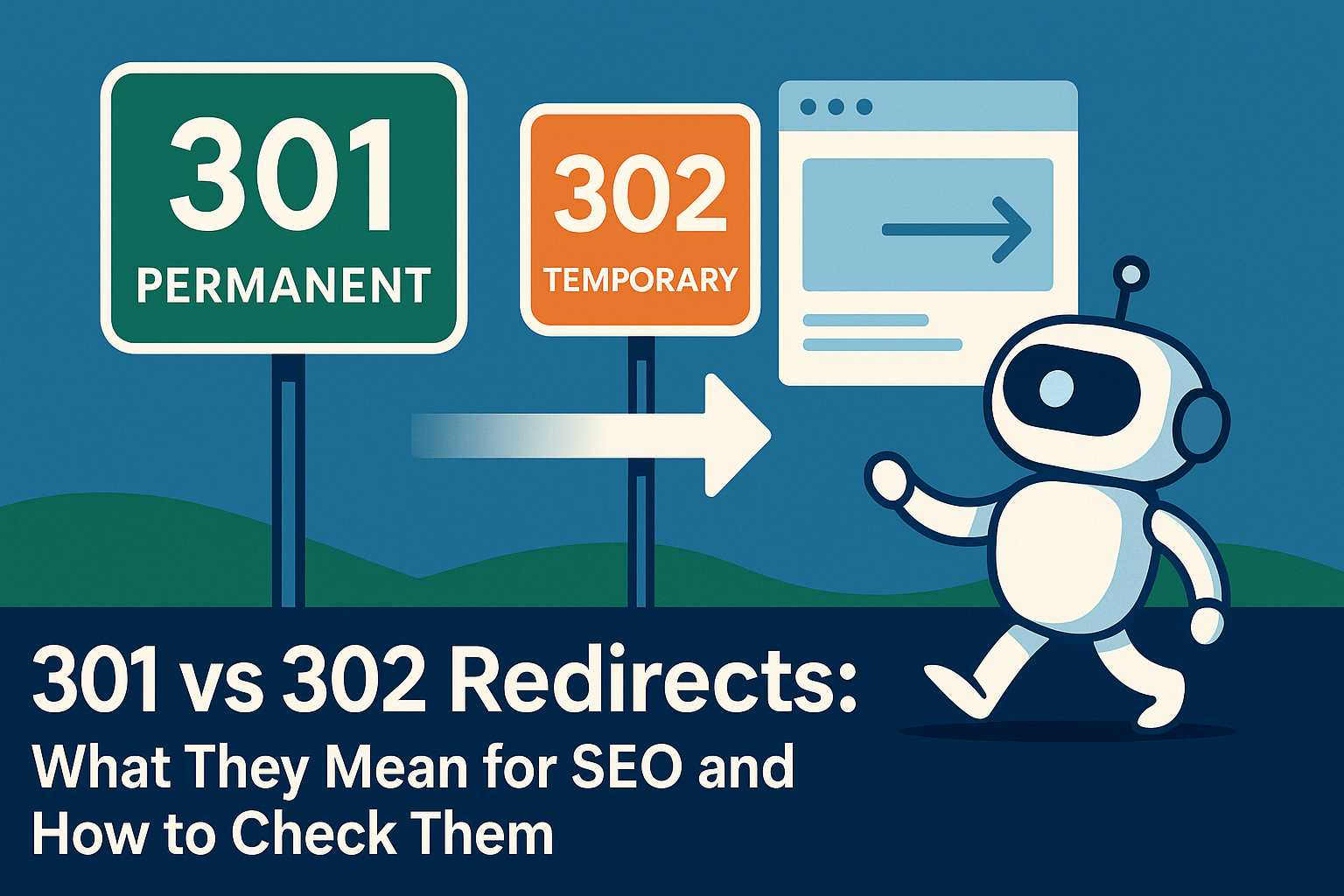
301 vs 302 Redirects: What They Mean for SEO and How to Check Them
Redirects are an essential part of website management and SEO. But not all redirects are created equal—using the wrong type can harm your rankings and confuse search engines. In this guide, we’ll explain the difference between 301 and 302 redirects, when to use each, and how to test redirects instantly with the Reciphub Redirect Checker.
Introduction: Why Redirects Matter
When managing a website, there will be times when you need to move or replace content. Redirects tell both browsers and search engines where to go when a page changes location. But choosing the wrong type of redirect can damage your SEO.
What Is a Redirect?
A redirect automatically sends users (and search engines) from one URL to another. It’s handled via HTTP status codes.
Types of Redirects
- 301 Redirect → Permanent
- 302 Redirect → Temporary
- 307 Redirect → Temporary (HTTP/1.1 standard)
- Meta Refresh → Client-side redirect (less SEO-friendly)
301 Redirect (Permanent)
- Tells search engines the page has moved permanently.
- Passes ~90–99% of SEO value (link juice).
- Best for:
- Site migrations
- Deleted pages
- Changing domain names
302 Redirect (Temporary)
- Tells search engines the move is temporary.
- Does not pass full SEO value.
- Best for:
- A/B testing
- Seasonal content
- Short-term campaigns
SEO Impact of Redirects
301 Redirects
Consolidates ranking signals
Ensures backlinks keep value
Best practice for permanent changes
302 Redirects
May cause duplicate content issues
Risky if left long-term
Fine for testing or temporary campaigns
How to Check Redirects
Method 1: Online Redirect Checker
Use Reciphub Redirect Checker:
- Visit Reciphub.site
. - Open Redirect Checker.
- Enter your URL → instantly see if it’s a 301, 302, or other redirect.
Method 2: Browser Developer Tools
- Open Chrome DevTools → Network tab
- Reload → Check the status code
Method 3: Command Line (cURL)
curl -I -L https://example.com
Common Mistakes with Redirects
- Using 302 instead of 301 for permanent changes
- Redirect chains (A → B → C → D) → slows crawling
- Redirect loops → infinite cycles
- Redirecting everything to homepage → bad SEO
Best Practices
- Always use 301 for permanent moves.
- Test redirects after setup.
- Avoid redirect chains and loops.
- Update internal links instead of relying solely on redirects.
FAQs
Q: Do 301 redirects hurt SEO?
A: No—done correctly, they preserve SEO.
Q: Can 302 redirects last forever?
A: They can, but search engines may eventually treat them as 301s.
Q: Do redirects slow down my site?
A: Each redirect adds a small delay. Avoid long chains.
Conclusion
Redirects are a vital SEO tool, but only if used correctly. Remember:
- 301 = permanent
- 302 = temporary
Test your redirects easily with the free Reciphub Redirect Checker
to avoid costly SEO mistakes.
Contact
Missing something?
Feel free to request missing tools or give some feedback using our contact form.
Contact Us